A scratched hardwood floor usually gets your attention at the worst time – right before guests arrive, after moving furniture, or when sunlight hits the room just right. If you are wondering how to repair scratched hardwood floors, the first step is simpler than most homeowners expect: figure out how deep the scratch really is before you try to fix it.
That matters because not every scratch needs the same solution. Some marks sit only in the finish and can be blended quickly. Others cut into the wood itself and need a more careful repair. If you use the wrong method, you can make the area more noticeable instead of less.
How to repair scratched hardwood floors based on damage depth
A good repair starts with diagnosis. Run your fingertip lightly across the mark and look at it from a low angle in natural light. If the scratch looks white or dull but does not feel deep, it is often limited to the protective finish. If your fingernail catches, or if you can see exposed raw wood, the damage is more serious.
Floor color also changes the best approach. Dark-stained floors tend to show light-colored scratches more clearly, while natural oak and lighter finishes can hide minor wear better. Gloss level matters too. On a satin floor, a small repair may blend in easily. On a high-gloss floor, even a decent spot repair can remain visible.
Light surface scratches
Light scratches are the easiest to address. These usually affect only the top finish and often come from dust, pet nails, or chair movement. In many cases, a thorough cleaning with a hardwood-safe cleaner already improves the look because dirt settles inside the scratch and makes it appear deeper.
Once the floor is clean and fully dry, a hardwood floor touch-up product or scratch concealer that matches the stain color can help disguise the line. Apply it carefully, wipe away the excess, and check the repair from different angles. The goal is blending, not building up a thick patch.
For shallow finish scuffs, a professional-grade refresher or recoating solution may help restore the sheen across a broader section. This works best when the wear is spread over the room rather than concentrated in one gouge. If the floor has wax, older coatings, or inconsistent past repairs, though, recoating may not bond properly.
Medium scratches that reach the wood
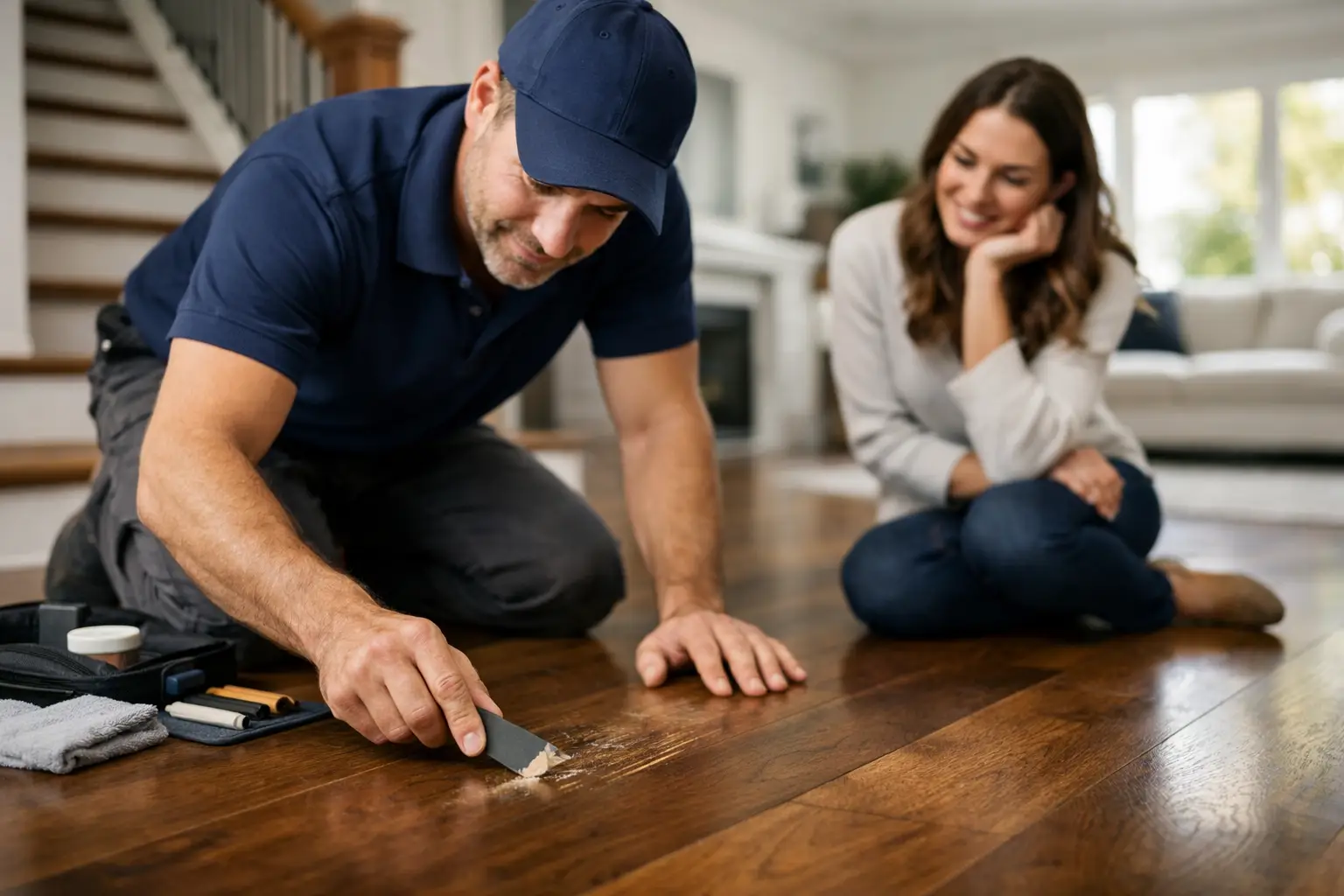
When the scratch cuts through the finish and into the wood, color becomes the main issue. These scratches often look lighter than the surrounding floor because bare wood is exposed. A stain marker, blending pencil, or touch-up kit made for hardwood can reduce the contrast.
Start small. Test the color in an inconspicuous area first, because a repair that is too dark can look worse than the original damage. Fill the scratch gradually instead of trying to fix it in one heavy pass. After the color is close, a small amount of finish repair product may help seal the area.
This is where homeowners often run into a trade-off. A simple touch-up is faster and less invasive, but it may not disappear completely, especially on prefinished boards with beveled edges or floors with noticeable grain variation. If your priority is making the damage far less visible, a spot repair may be enough. If your priority is a near-uniform appearance, a larger refinishing approach may be the better choice.
Deep scratches and gouges
Deep scratches, dents, and gouges need more than a color pen. If wood fibers are torn up or a groove is clearly visible, the repair usually involves wood filler, sanding, stain matching, and topcoat work. That process sounds straightforward, but the challenge is getting the repaired area to blend with the surrounding boards.
For isolated damage, a stainable wood filler may help level the surface. After it cures, the area can be sanded smooth, stained to match, and sealed. The difficulty is that filler and natural hardwood absorb stain differently. On some species, especially oak with visible grain, the repair can still stand out if the color match is off or the sheen does not align with the rest of the floor.
If the scratch is severe and limited to one or two boards, board replacement may make more sense than repeated patching. This is especially true if the damage includes cracks, chipped edges, or moisture-related movement around the board. A well-executed board repair can look cleaner than a filler-based fix.
What to do before any hardwood scratch repair
Before you repair anything, clean the area thoroughly and make sure the floor is free from waxy residue, oils, and dust. A repair product applied over buildup will not bond or blend as well. It is also worth checking whether the floor is site-finished or prefinished, because that affects how easily a spot repair can be feathered into the existing coating.
Take a close look at the overall condition of the room too. If you have one visible scratch on an otherwise excellent floor, a targeted fix is reasonable. If there are scratches throughout the traffic lanes, dull finish near entry points, and wear around chairs or pets, it may be more practical to think beyond a one-off repair.
That bigger-picture view saves time and frustration. Homeowners sometimes spend hours touching up individual marks on a floor that really needs buffing, recoating, or refinishing to look consistently better.
When DIY works and when professional repair is worth it
DIY can work well for light scratches and some moderate cosmetic damage. If you are comfortable testing products carefully, matching color patiently, and accepting that the result may be improved rather than perfect, a homeowner repair can be a smart option.
Professional repair is usually the better route when the scratches are deep, the floor has high visibility, or the stain color is difficult to match. It also makes sense when damage affects multiple boards, appears in a large open area, or sits under strong natural light where every mismatch shows.
Another factor is finish compatibility. Floors that have been recoated, waxed, cleaned with the wrong products, or repaired before can behave unpredictably. A professional can identify whether the area can be spot repaired, screened and recoated, or needs a more involved refinishing approach.
In homes across Charlotte and surrounding areas, this is a common turning point. Many scratches look simple at first, but once finish type, stain variation, and board condition come into play, a skilled repair often delivers a cleaner and longer-lasting result.
How to keep scratches from coming back
Once you repair scratched hardwood floors, prevention matters just as much as the fix itself. Felt pads under chairs, benches, and stools help reduce repeated surface damage. Entry mats catch grit before it gets ground into the finish. Keeping pet nails trimmed also makes a noticeable difference, especially on softer wood species.
Furniture moves are another major cause. Lifting instead of dragging sounds obvious, but it prevents many of the deep scratches that lead to board-level repair. For rolling office chairs, use a protective mat if the room layout allows it.
Cleaning habits matter too. Dirt acts like sandpaper on hardwood. Regular sweeping or vacuuming with a hardwood-safe attachment helps preserve the finish. Just avoid overly wet mopping or harsh cleaners that can dull the protective coat and make the floor more vulnerable to wear.
The repair method should match the floor, not just the scratch
The most effective answer to how to repair scratched hardwood floors is not a single product or trick. It is choosing the right level of repair for the depth of damage, the type of finish, and the condition of the floor around it.
A light scratch may need only cleaning and a touch-up. A deeper mark may call for filler, stain work, or board repair. And if scratching is widespread, refinishing may be the more practical solution than chasing one spot after another. The right fix is the one that restores the look of the floor without creating a patchwork of mismatched repairs.
If you are unsure which category your floor falls into, getting an experienced opinion early can prevent unnecessary trial and error. A good hardwood repair should not just hide the damage. It should make the room feel finished again.