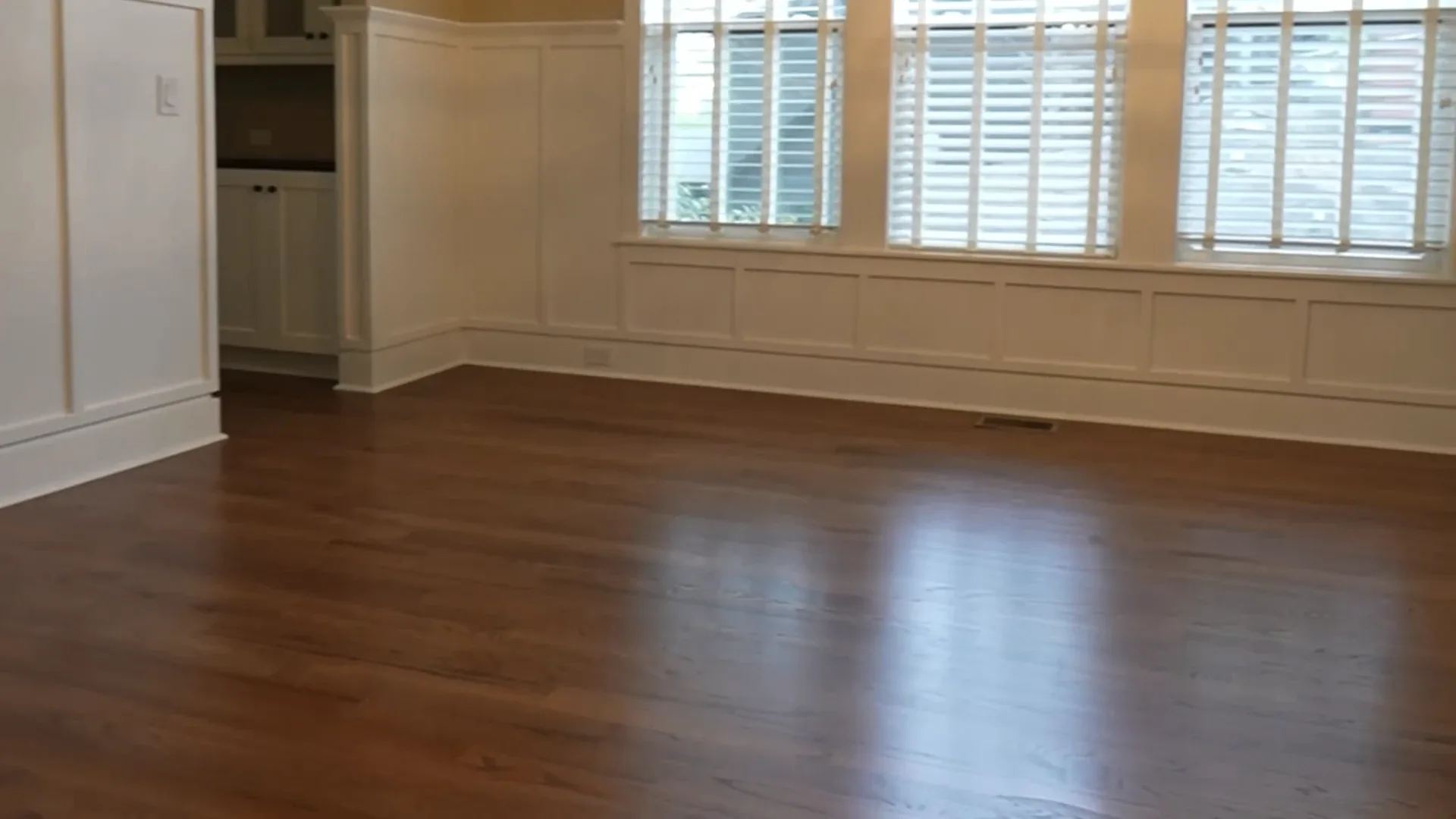
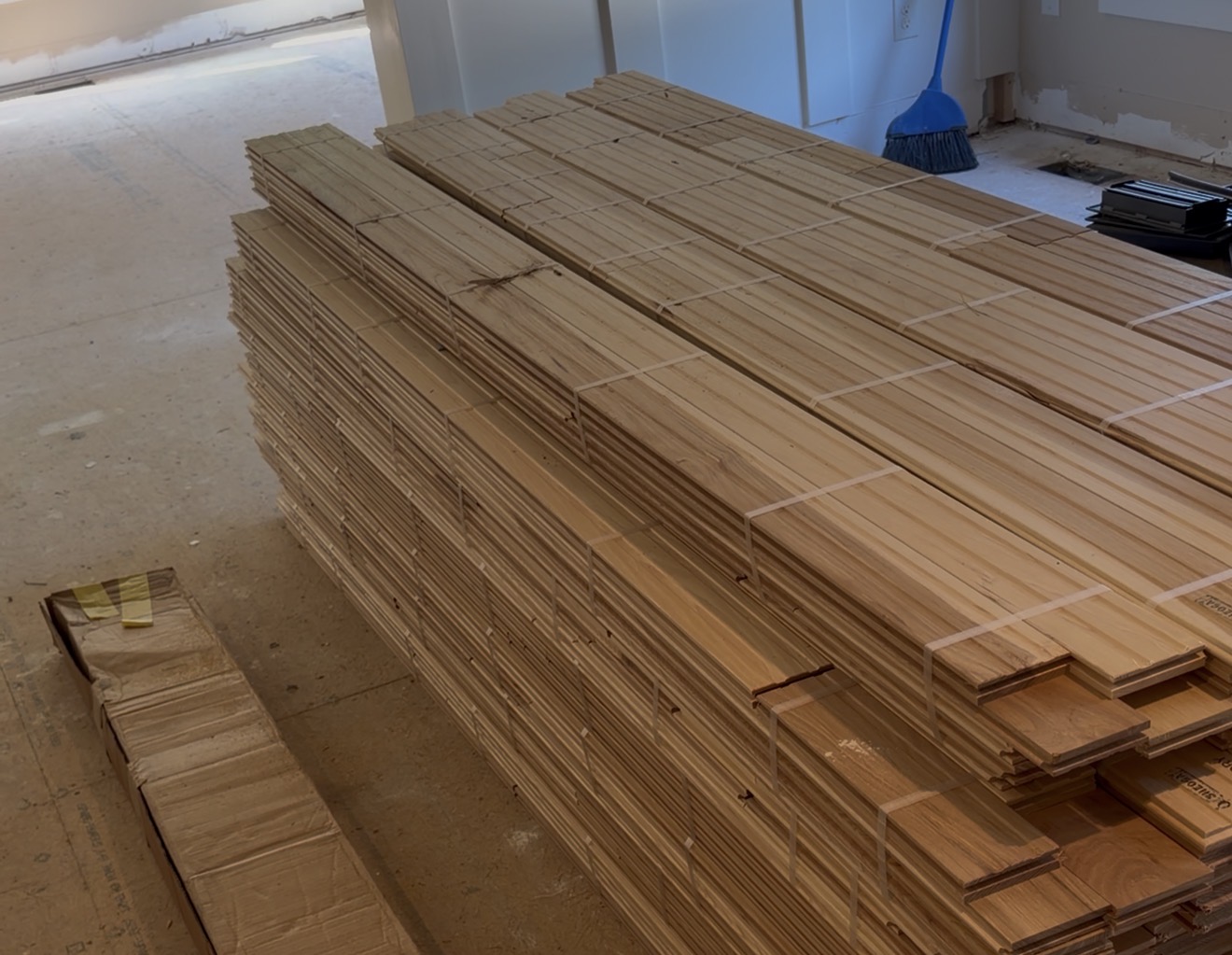
Ask most homeowners what makes a hardwood floor last, and they will mention the species, the finish, or the skill of the installer. All of that matters. But one of the most important steps happens before a single board goes down, and it takes only a small handheld meter: hardwood floor moisture testing.
At HD Hardwood Floors, we test the moisture of both the wood and the subfloor before installation. Here is why that step matters so much in the Charlotte area, what we are looking for, and what you can do to help your new floors settle in well.
Why Moisture Matters So Much for Hardwood
Wood is a natural material, and it never completely stops responding to its surroundings. When the air is humid, wood absorbs moisture and swells. When the air is dry, it releases moisture and shrinks. This is normal, and a properly installed floor is built to handle small seasonal movement.
The trouble starts when a floor is installed while the wood and the subfloor are at very different moisture levels, or while either one is wetter than it should be. The boards keep moving after installation, sometimes a lot, as they try to reach balance with the house.
Charlotte gives wood plenty to react to. Our summers are warm and humid, and in winter the heat runs and indoor air dries out. Many homes in the area sit over crawl spaces or on concrete slabs, and both can send moisture up into a floor from below. That is why we treat moisture as something to measure, not something to guess.
What Can Go Wrong When Moisture Is Ignored
Moisture problems rarely show up on installation day. They tend to appear weeks or months later, once the wood has had time to move. Common signs include:
- Cupping: the edges of each board rise higher than the center, so the floor looks slightly rippled. This often points to moisture coming from underneath.
- Crowning: the opposite of cupping, where the center of the board sits higher than the edges.
- Gaps: wood that was installed too wet shrinks as it dries, leaving open seams between boards.
- Buckling: in more serious cases, boards swell so much that they lift away from the subfloor.
- Squeaks and loose boards: repeated movement can loosen a floor over time.
Most of these problems are frustrating and disruptive to correct after the fact. Many of them can be avoided with a few minutes of testing up front.
How We Test Before Installing
Before our solid and engineered hardwood installation begins, we check two things: the moisture content of the flooring itself and the moisture of the subfloor it will sit on. A moisture meter gives an actual number for each, so the decision to start is based on readings rather than on how the wood looks or feels.
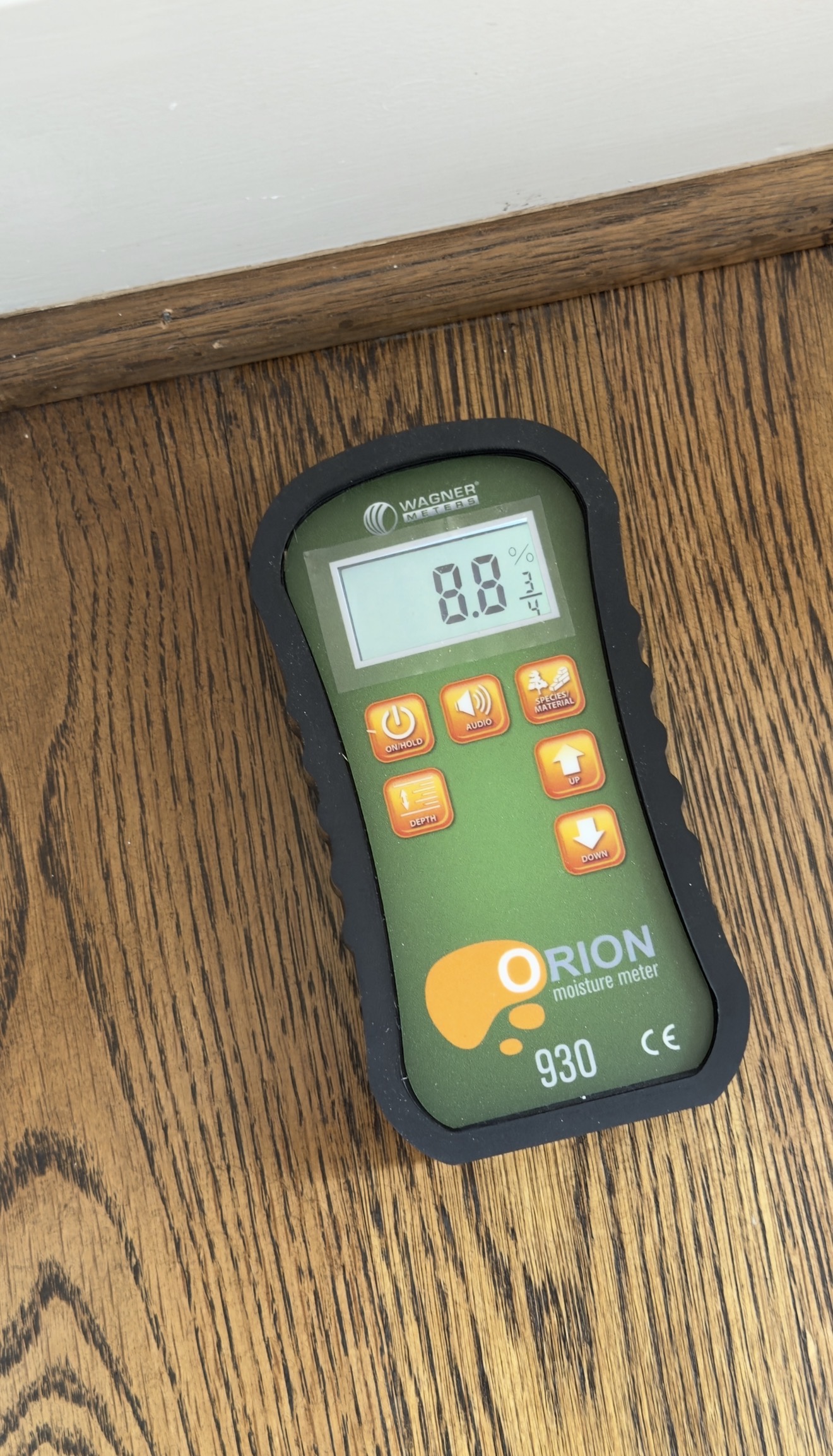
What matters is not only each number on its own, but how close the two are to each other. Guidelines from the National Wood Flooring Association (NWFA) generally call for the flooring to be within about 4 percentage points of a wood subfloor for narrower strip flooring, and within about 2 points for wider planks, because wide boards show movement more.
If the readings are where they should be, we move ahead. If they are not, we tell you what we found and what it means. Sometimes the wood simply needs more time in the house. Sometimes the readings point to something that should be looked at first, such as a damp crawl space or an old leak.
Concrete slabs deserve extra attention, because concrete can hold and release moisture for a long time. For homeowners who want solid hardwood over a slab, we can install a plywood subfloor first and then the solid hardwood on top. Engineered hardwood is another option worth discussing, since its layered construction makes it more stable than solid wood when humidity changes.
Acclimation: Letting the Wood Get Used to Your Home
Testing goes hand in hand with acclimation. Acclimation simply means giving the flooring time inside your home, under normal living conditions, so it can adjust to the temperature and humidity it will live in.
A common misunderstanding is that acclimation is about a set number of days on a calendar. It is really about moisture content. The wood is ready when the meter says it is, which is why these two steps belong together.
It also means the house itself has to be ready. If the heating and cooling system is off, or if drywall mud and paint are still drying, the wood is adjusting to conditions that will not last, and it will move again once the house returns to normal.
How You Can Help Your New Floors Succeed
You do not need a moisture meter to make a real difference. A few simple habits before and after installation go a long way:
- Keep the HVAC running. Run your heating or air conditioning as you normally would before, during, and after installation so the wood adjusts to real living conditions.
- Finish the wet work first. If your project includes drywall, painting, or tile, let that work dry before the wood arrives.
- Tell us about past water issues. A dishwasher leak, a plumbing repair, or a spot that has always felt damp is useful information, even if it seems minor.
- Look under and around the house. Make sure gutters and downspouts carry water away from the foundation, and have a damp or musty crawl space looked at.
- Keep indoor humidity steady. Many flooring manufacturers recommend keeping relative humidity in a moderate range, commonly around 30 to 50 percent, all year. A dehumidifier in summer or a humidifier in winter can help.
- Clean up spills promptly. Standing water is never a friend to wood.
If you already have a floor that is cupping, resist the urge to sand it flat right away. The source of the moisture should be found and fixed first, and the wood given time to dry. Sanding too early can leave boards crowned later. Once the floor is stable, hardwood floor sanding and refinishing can often bring it back.
And for rooms where moisture is a constant concern, wood may not be the best fit. In those spaces, luxury vinyl plank flooring is worth a look, since it is far less sensitive to moisture than hardwood.
A Small Step That Reflects How We Work
Moisture testing is not the part of a flooring project anyone shows off. But it is one of the steps that separates a floor that looks good on day one from a floor that keeps looking good as the seasons change.
HD Hardwood Floors is a family-owned company that has served Charlotte since 2017. Founder Hugo Filho has more than 11 years in flooring and is an NWFA member, and he sums up his approach simply: “I do the work like it’s my own home.” Checking moisture before we install is part of that, and our work is backed by a 1-year workmanship warranty.
If you are planning new hardwood floors in Charlotte, Matthews, Huntersville, Fort Mill, or anywhere nearby, we would be glad to take a look. We bring samples to your home and answer your questions in English, Portuguese, or Spanish. Call (704) 726-2575 to schedule your free in-home estimate.